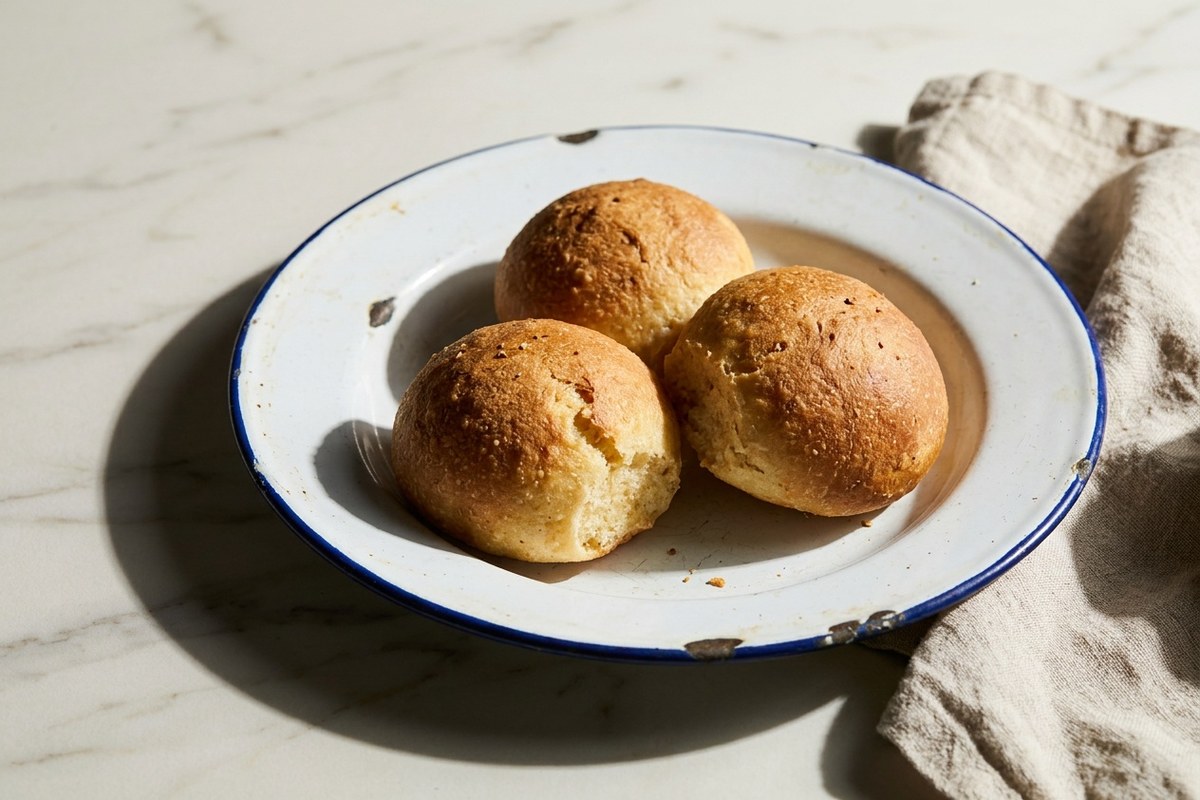
Buttery keto slider buns
Mozzarella, cream cheese and butter melted together, worked into coconut flour and egg, and scooped into small buns — two grams of carbs each.
More keto.
- Makes 14 slider buns
- Time 25 min
- Oven 400°F
- keto
- low carb
Method
- Preheat the oven to 400°F and line a baking sheet with parchment paper.
- Crack the eggs into a small bowl and whisk until frothy. In another small bowl, whisk the coconut flour, baking powder, onion powder, garlic powder and salt together. Set both aside.
- Put the mozzarella, cream cheese and butter in a large microwave-safe bowl and microwave in 20-second bursts, stirring between each, until smooth and completely combined.
- Quickly tip the flour mixture and the beaten eggs into the cheese mixture and stir with a fork until completely combined.
- Using a 2-tablespoon cookie scoop, drop the mixture onto the prepared sheet to make 14 buns about 2 inches across, leaving 2 inches between them.
- Bake 10–12 minutes, until lightly browned. Cool on the sheet before serving.
Notes
Leftovers keep wrapped in the fridge for a week, or frozen for a month — thaw overnight in the fridge.
The same dough family as the fathead pizza crust and the sandwich loaf, with coconut flour in place of almond.
SourceAdapted from mindbodygreen.com (from Keto for Foodies by Nicole Downs)mindbodygreen.com/articles/keto-burger-bun-recipe
More bread & baking
Best ever flax buns
Flaxseed meal, mozzarella and egg stirred into a dough and baked in mounds — eight buns, six grams of protein each.
Cloud bread
Egg whites whipped stiff and folded into a cream-cheese yolk base, then baked into soft pale rounds — the flourless stand-in for a bun. Two batch sizes, both here.
Tuna bread
A can of tuna blended with eggs and baking powder and baked in a ramekin — a small, dense high-protein loaf that slices and takes a sandwich filling.
Cupcakes
A small-batch vanilla cupcake — the amounts look like a scaled formula rather than a rounded spoon measure.